Showing posts with label Antique. Show all posts

Friday, February 27, 2015

Coon Songs: The Most Offensive Music EVER?!

While it's still Black History Month, let's explore the outrageously offensive genre of minstrel show/black stereotype musics known as 'coon songs.'  Hugely popular during the early decades of sound recording and then wiped from the culture like they never existed, coon songs nevertheless produced not only the recording industry's first black stars, but some of the first hit singles ever. Minstrel shows in general led to vaudeville, the root of modern American show biz. And yet Al Jolson's blackface performance of "Mammy" in the ground-breaking film "The Jazz Singer" is probably the only experience most people have had with this genre.

I have enough recordings (songs and comedy skits) to fill up 2 or 3 disks, but that would make even a Grand Kleagle of the KKK's head explode. I've whittled it down to this representative selection of the history of the genre - from the pre-master disk era of he late 1800s when, incredibly, a mass of recording cylinders had to be set up to record each performance individually (so the poor singer had to sing the damn song over and over) up to the genre's apparent demise in the 1920s, the era of the "Great Migration."  Black Americans started moving from the rural South, transforming the culture of Northern cities like New York (hence, the "Harlem Renaissance") and Chicago. With the Jazz Age in full swing in the Twenties, the old stereotypes of country bumpkins pining for them good ol' plantation days were no longer too convincing (not that they ever were.)

You'll notice a subtle transformation as time progresses, from the mocking humor of "All Coons Look Alike To Me" to sympathetic songs about children, or "pickaninnies." Coon songs were becoming uncool, and believe it or not, these sentimental ballads were considered to be positive coon songs, written to counteract the cruelty of earlier songs. Hey, they meant well.... 

How popular were these songs? I can't find a single book specifically dedicated to the subject, but "From Edison to Marconi: The First 30 years of Recorded Music" has a whopping 6 page index

They're not all that awful. Some songs, like "Pullman Porters' Parade" salute America's black railroad workers, and "Nigger Blues" really is an early blues tune. Some certainly have musical value. George W. Johnson's records were fun and funny, and that's apart from their massive historical value - he was the first black singing star, thus paving the way for everyone from Robert Johnson to Nat King Cole to Michael Jackson.  (You can't condemn him for these songs. It was the 1800s, what choice did he have?!) And "Bake Dat Chicken Pie" is, once you get past the reprehensible lyrics, a great tune, especially the way the intertwined vocals suggest Dixieland jazz. I felt weird about liking this song 'til I heard that Lenny Bruce was also a fan, and would play and sing along with the record in his act. I am vindicated! Er, maybe...honestly, snickering really is the most appropriate response to the amazing ridiculousness of these songs. Here's a party game: try to listen to "Ma Pickaninny Babe" without laughing.

And let's contemplate this truly bizarre fact: black minstrel performers wore blackface. 

A Treasury of Beloved Coon Songs

01 George W Johnson -The Laughing Coon (1898)
02 George W Johnson - The Whistling Coon (1896)
03 Dan W. Quinn - At A Georgia Camp Meeting (1898)
04 Arthur Collins with Vess L Ossman-All Coons Look Alike to Me (1902)
05 Billy Golden - An evening with the minstrels (aka I'm a Nigger That's Living High) (1903)
06 Ada Jones - If the Man in the Moon Were a Coon (1907)
07 Arthur Collins & Byron G. Harlan - Bake Dat Chicken Pie
08 Arthur Collins - dixie dan (1908)
09 Polk Miller the Old South Quartet-Watermelon Party (1909)
10 Ada Jones - You'se just a little nigger, still youse mine, all mine (1910)
11 Golden and Hughes - Darktown Poets (1911)
12 Elsie Baker - Pickaninny's lullaby (1912)
13 Walter Van Brunt - Hear the pickaninny band (1913)
14 Al Jolson - Pullman Porters' Parade (1913)
15 Golden and Hughes - Darktown Eccentricities (1913)
16 Will Oakland  - Ma Pickaninny Babe (1914)
17 Olive Kline/ Elsie Baker /Margaret Dunlap - Go to Sleep My Dusky Baby  (to the tune of 'Humoresque') (1916)
18 American Quartet - Darktown Strutters Ball (1918) (the one song that survived the coon song era, this became an oft-covered standard, sung by everyone from Ella Fitzgerald on down)
19 Al Bernard - Nigger blues (1919)
20 Crescent Trio - Pickaninny blues (1920)
21 Margaret A. Freer - Pickaninny Rose (1921)

Thanks to the Archeophone label, and the UCSB Cylinder Digitization Project for some of these; there's more HERE and HERE. And then there's THIS album. But I leave all those to the truly dedicated scholars.


Friday, December 12, 2014

"Christmas Memories Played on Antique Musical Boxes"

Victorian-era robots! Plinkety-plonkety music not played by human hands!

If the phrase "music box" conjures up images of that tchotchke in your grandma's living room with a ballerina twirling around on top as "Moon River" plays, you may be surprised to hear how lush and orchestrated these beauties sound. We don't know exactly what singers and musicians of the pre-recording era sounded like, but as these big boxes, sporting such impressive names as the 'Symphonium,' were actually found in household parlors of the late 1800s, listening to them is a bit of a time machine into them long gone days before radio, records, or the internet provided in-home musical entertainment, and song titles all started with "O."

The tunes featured on this 1977 release are short, sometimes under a minute, so for the big hits like "Silent Night," they wind 'em up and play the song two or three times in a row. And if you hate Christmas music, there's plenty of unfamiliar songs here that don't feel especially seasonal and could feed your mechanical-music jones all year 'round.

Christmas Memories Played on Antique Musical Boxes

1. O Tannenbaum
2. O Sanctissima
3. Silent Night
4. Among Shepherds-The Holy City-Every Year Anew
5. O Come Little Children
6. O Tannenbaum
7. O Come Little Children
8. See the Conquering Hero
9. Cloister Bells-Ave Maria
10. O Come All Ye Faithful
11. Monastery Bells 

Another vinyl gem unearthed by this blog's ol' pal Brer Windbag. And if you're looking for some appropriate Victorian-era literature to read whilst listening to this, how 'bout this 1882 book of children's short stories that usually feature the children dying. Features the feel-bad classic, "The New Mother":

"Anyhow Stories"

O come little children, indeed. "The Imitation Fish" is another cherished tale to make your kids miserable. And who wants to set "The Paper Ship" to music?
Thanks to Count Otto, and Windy!


Friday, September 26, 2014

The Story of the First Voice Synthesizer, The SONOVOX

By request, now back up:
- Strange novelty songs collection "Fun Music"
- Zoogz Rift "Murdering Hells Happy Cretins"

Long before Peter Frampton's talk-box, the Vocoder, or Autotune, there was the Sonovox, demonstrated here in what must surely be the strangest "pop" music of the 1940s:


Anyone have a spare Sonovox lying around? It's almost David Dole's 100th birthday, and he'd really like one. Granted, the considerable historical importance of this gizmo almost assures that it won't be found in too many attics or garages - museums, more like.  But he really deserves one. After all, he was one of it's first users. 

If any invention was truly out of time, the Sonovox is it. It's ability to create strange electronic sounds and music would have been welcomed in the post-Moog '70s and '80s when bands like Kraftwerk and Zapp were artificially processing their vocals. But, incredibly, the Sonovox was invented at the height of the Big Band era. For the most part, people didn't really know what to do with it. But our special guest poster today is here to tell us about the one industry that did utilize the Sonovox: advertising. 

I am quite amazed and delighted that Mr. David W. Dole is able to give us this first-hand account of the history of the Sonovox. I don't know if it's story has ever been told in such detail in public before. Here's the man himself:

Sonovox enthusiasts: It must have been around 1942... I was 28 years old - working in the "broadcast department" (of course then that meant "radio" only) at Henri, Hurst & McDonald - an ad agency - 520 No. Michigan- Chicago. About 1940, in California, Gilbert Wright was dressing for the day and was using his new electric razor with which to shave. Some 15 feet away - in the bedroom, his wife called to him with a question. He answered while stroking the electric razor over his throat. Mrs. Wright called to him: "What did you say, honey? - it sounded like your razor was talking to me!" Voila! Birth of an idea! 

Gil thought it thru - and about two years later he and wife were visiting her brother (I think that was the relationship) in Chicago - and putting out the word they had something new and unique called Sonovox for which Gil had obtained a patent. Gil's brother-in-law was a partner in a radio rep firm on Michigan Avenue. The word went out, through the brother-in-law's sales reps to the timebuyers in Chicago that Sonovox was issuing an invitation to visit the radio rep firm and learn about Sonovox. I was interested and visited - and learned how to become a Sonovox articulater. I spent perhaps 6 or 7 lunch periods - slightly extended - using Gil's equipment plus a 10" Victor Red Seal phonograph record of Andre Kostelanetz orchestra of some 40-60 musicians playing "Mary Had A Little Lamb". 

I was particularly interested in the capabilities of Sonovox and how it might effect my then current job. You see I had been a radio sound effect artist in Minneapolis and had moved to Chicago and joined the agency for John Morrell and Company - meat packers - in Ottumwa, Iowa for their product, then the largest selling dog food in America. On the program, encouraged by the announcer's "Come on, boy. That' it. Sit up! Speak, speak:" And with that I would whine, growl, and end with "Woof, woof, Red Heart" The announcer would repeat it - "That's it - Red Heart"... in three flavors: Beef, Fish and Cheese! Americs's largest selling dog food!" I was curious as to whether Sonovox might either put me out of business as a sound man - or would be a tool to use in place of my live performances ! Turned out neither! 

As I was deciding on this, Mrs. Wright came to me, complimented me on getting the use of Sonovox down pat and asked if I would consider making a trip to New York on their behalf as an articulator. It seems that they had sold the idea of using Sonovox to Bromo Seltzer's agency - articulating a steam engine chugging along repeating "Bromo-Selt-zer - Bromo- Selt-zer", but that Mrs. Wright had been the articulator and the client felt that the product would be better represented if the articulator was a male. (The Sonovox technique is sexless but the client was not persuaded.) I replied "Yes, be glad to". But it proved un-necessary - the client was convinced Sonovox was sexless. 

I'm still in the market to acquire Sonovox equipment with which to entertain my grandchidren! Know where I can acquire a unit? David W. Dole dwdole@me.com 

There are a number of wonderful old "sono" radio commercials you can listen to here: 
PAMS advertising  

The other early adopters of the Sonovox were children's record producers. I've uploaded one such goodie from 1947, plus a bonus track: an mp3 of the audio from the above Kay Kyser video, from the 1940 film "You'll Find Out". 

"Sparky's Magic Piano"

Much thanks (and happy birthdaty!) to David Dole.

Oh, and he would also like to pass on one of his other innovations:

Use DOLE DATNG - Briefest and best! "JA" is January. All other months use 1st and 3rd letters: FB MR, AR, MY, JN, JL, AG, SP, OT, NV & DC. Letters ALWAYS in the middle - with date and year interchangeable but 2 numbers for "day" and 4 for "year". Copyrighted 1996 but free for all! 


Friday, November 15, 2013

Ahh...Outsider Music...

The George King/Joe Corney Space-Age Organ Sounds are back on-line.

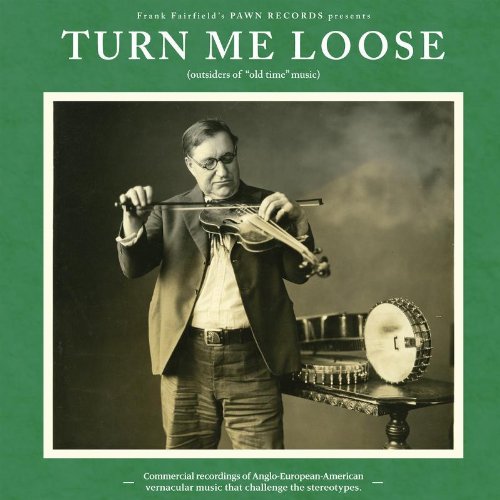
The first thing many Americans think when they hear the phrase "folk music" is still the Joan Baez/Dylan types listlessly strumming acoustic guitars and singing protest songs in coffeehouses, none of which has much to do with actual American folk traditions. The excellent new compilation Turn Me Loose: Outsiders of Old-Time Music
features not only the weird 'n' wild obscurities you maniacs crave, but it also serves as a nice corrective to the '50s/'60s folk revival's rewriting of history. For one thing, acoustic guitars were not too common (almost no songs on this album feature them), banjos were originally a black instrument (derived from African instruments), silly humor was much more common then protest politics (e.g.: the wacked-out duo Mustard and Gravy), and plenty of "non-folk" instruments like the piano really were used in folk music, Charlie Tweedy's berserk stylings on the ivories being one of this albums' many highlights (which reminds me of Tom Lehrer's crack introducing his song "The Folk Song Army": since the piano isn't considered a folk instrument "imagine I'm playing an 88-string guitar.") Ernest Rodgers' Greek lesson "Mythological Blues" punctures holes in the notion that these were all dumb, uneducated hicks.

Most of these recordings, taken from old '78s, are by fairly professional if necessarily rough 'n' raw performers, but at least one character here, Willard Hodgin, is just flat-out nuts. To quote from compiler Frank Fairfield's extensive liner notes: "He recorded 18 sides (1927-1928) for various labels, which is quite an outstanding feat considering how unusual a performer he was. The combination of the occasional verse speckled in with his own unusual yet charming stanzas and his delirious haphazard banjo strumming make him one of the most unique performers to ever record." 18 songs?  Someone put out a complete Willard Hodgin album! (Clicky on song titles to take you to Divshare-land:)

Willard Hodgin: "Don't Get One Woman on Your Mind" Now with bonus offensive racist lyrics! 
But don't musical saws make everything better? Dig this barn dance earworm:
South Georgia Highballers: "Mister Johnson Turn Me Aloose"

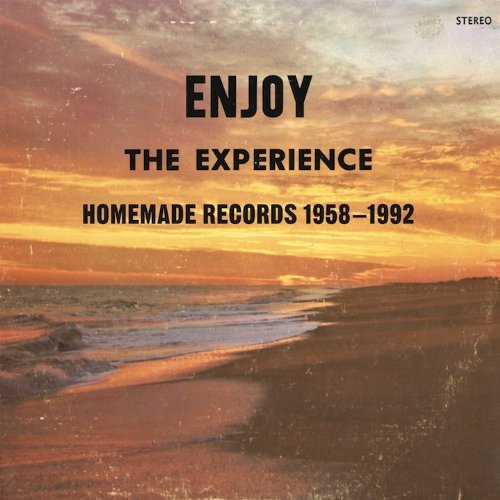
Another great new comp recently purchased at my local record emporiums is "Enjoy The Experience: Homemade Records 1958-1992," a two-disc set plus 44 page booklet, all for only $15. Explore the wonderful world of private-press records! I was amused to see that the booklet featured reproductions of the covers of a couple albums I own, namely Mike Hudson and Wayne & Marin Foster. No tracks from them featured on this, but I included them on my own collection "I'll Take Las Vegas." This album goes way beyond Vegas-y lounge performers, tho, ranging from the already sorta-well known punk jazz of Gary Wilson and the middle-aged former Big Band singer-turned-hippie Arcesia, to such unknowns as the hip Christian behind this absurdly catchy upbeat bit of apocalyptic pop:

Ray Torsky: "666"

The booklet includes interviews with some of the performers the compilers were actually able to track down. The heartbreaking tale of Joe E.'s swindle at the hands of a fly-by-night record label is particularly memorable. Unfortunately nothing is known about one Vinny Roma, but he recorded what could be this blog's theme song.  Hell, it could be my (or your) life's theme song:

Vinny Roma: "Ahh...Music"

And if that's still not enough outsider music for you, Colchester, England's premier mental patient/transvestite/stoner/coprophiliac singer-songwriter has a new album out called
"Hippie Heaven
for your free downloading pleasure. It's like a 12" single more than an album, with the same songs appearing in slightly different forms throughout. Highlights inc the biting "Parasite Pest," and "Rock 'n' Roll Brothel" ("Why won't any of the girls have sex with me? It's quite frustrating...I could get a complex!") The backing track of "Lady Dub #1" could be by Martin Rev. And paging Yoko Ono! The final track is a 20 min field recording of wind.


Wednesday, October 30, 2013

Halloween Stomp: A Haunted House Party

UPDATE 11/12/13: Back on-line 

Hey, all you hep cats 'n' flipped chicks, here's a vout-o-rooney volume of vintage jazz, blues, and music hall spooky songs that I meant to post earlier, 'til the death of Lou Reed done threw me for a loop. This 1990 album was released by the real gone studs at Jass Records, who had a great, all-too-brief run in the late '80s/early '90s compiling wonderful novelty oddities from the 78 rpm era: dirty blues, reefer-smoking songs, etc. "Viper Mad Blues: 16 Songs of Dope and Depravity" was a particular fave of mine.

This one includes: swingin' numbers by a pre-crooning Nat Cole, a pre-lounge Louis Prima, a pre-corny sitcom Ozzie Nelson, and bad-ass big band stompers from the legendary likes of Cab Calloway, Peggy Lee, Glenn Miller, and the Dorsey Brothers. But despite all the dancing skeletons and boogieing boogie-men, Rudy Vallee's bad Cockney accent is the most frightening thing here.

Halloween Stomp: Haunted House Party


1


1) The Haunted House - Ray Noble & His Orchestra
2) Shivery Stomp - Frankie Trumbauer & His Orchestra
3) Mysterious Mose - The Radio All Star Novelty Orchestra - Dick Robertson
4) The Boogie Man Is Here - Tom Geron & His Orchestra
5) Haunting Blues - Red Nichols & His Five Pennies
6) Bug-A-Boo - Red Nichols & His Five Pennies
7) Got The Jitters - Don Redman & His Orchestra
8) The Boogie Man/I'm A Ghost - Todd Rollins & His Orchestra - Chick Bullock
9) The House Is Haunted (By The Echo Of Your Last Goodbye) - Glen Gray & The Casa Loma Orchestra - Kenny Sargent
10) Zombie - Gene Kardos & His Orchestra
11) Mr. Ghost Goes To Town - Louis Prima & His New Orleans Gang
12) Skeleton In The Closet - Nat Gonella & His Georgians
13) The Goblin Band - Glen Gray & The Casa Loma Orchestra
14) Hell's Bells - The New Yorkers (Sid Peltyn & His Orchestra) - Dick Robertson
15) With Her Head Tucked Under Her Arm - Rudy Vallee & His Connecticut Yankees

16) The Black Cat - Ozzie Nelson & His Orchestra
17) Strange Enchantment - Skinnay Ennis & His Orchestra
18) The Ghost Of Smokey Joe - Cab Calloway & His Orchestra
19) Ol' Man Mose Ain't Dead - Nat King Cole Trio
20) Swingin' At The Seance - Glenn Miller & His Orchestra - Dorothy Claire
21) Horror Fantasia For Spooks And Wild Indians - Charlie Barnet & His Orchestra
22) Fanfare/Cherokee (Theme) - Charlie Barnet & His Orchestra - Peggy Lee
23) Old Man Mose Is Dead - Charlie Barnet & His Orchestra
24) Pompton Turnpike - Charlie Barnet & His Orchestra
25) Haunted Heart - Tommy Dorsey & His Orchestra - Johnny Amoroso
26) The Headless Horseman - Kay Starr & Billy Butterfield Quintet
27) Dry Bones (Head Bone Connected To The Neck Bone) - Tommy Dorsey & His Orchestra

Monday, October 7, 2013

BeerBottle Percussion, NewWave Music-Boxes, Avant-Catholic Masses

Last year's assortment of experimental/alt-classical/unclassifiably weird new releases received a succinct two-word comment from reader Outa-Spaceman: "Astonishing stuff!" Like last year's roundup, these are new(ish) commercial releases that are well worth your hard-earned dollars/francs/pounds/heads-of-cattle/etc., with album moods ranging from Carton Sonore's charming toy-pop and the krazy kovers of Hanna Peel and Misfit Toys, to chin-stroking Afro-tronica and new avant-chamber music; from modern-day high holy masses to Neon Lushell's creepy "No Religion" - we're covering a lot of territory. And when was the last time you heard music performed entirely on beer bottles? Prepare to be astonished!

Astonishing Stuff!

1. Paddy Steer - "A. Welson Senior II": reader Phil C. hepped me to this Mancunian cat with this description: "He's a crazy one man moog/ glockenspiel/drumkit band with a penchant for paper maché robot/creature heads. I saw him at a tiny little festival a couple of years ago (he was on after the band I was with) and it was the best and strangest thing I've ever seen. For the whole of his set I felt like I was having an acid flashback." One of the best albums I've heard in recent years.  Was very hard to pick representative tracks, they're all doubleplus good. Watch the vids on his label site!
2. Misfit Toys - "Alone Again Naturally": from the ridiculously entertaining debut album "Does Anybody Really Know What Time It Is," a mad collection of '70s covers performed on banjo, bowed banjo (?!), marimba, oboe and clarinet, among others, radically reinventing Stevie Wonder, Chicago (as you may have guessed by the album title), Tony Orlando and Dawn, Black Sabbath, Talking Heads, the Gilbert O'Sullivan song featured here, and more. Transcends novelty, but still a must for any Maniacs' party.
3. Neon Lushell - "Black Confetti": I really liked these Midwesterners debut "Modern Purveyors of Filth and Degradation" and their new one (to be released Oct 8) is just as good - two-discs bulging with experimental ambient evil, as dark as goth or metal but without those genres' kitschy cliches.
4. Mammane Sani et son Orgue - "Bodo": hypnotic '70s Space-Age organ instrumentals from Niger, Africa; who knew such things existed?
5. Gunnelpumpers - "Bottley Functions": The six musicians of this Chicago-based avant/improv group perform here only on beer bottles. From their new one,"Montana Fix."
6. Gunnelpumpers - "Buffalo Jump": groovy percussion with three double-basses; that's like, what, 6 basses total? (boom-tish!)
7. Hannah Peel - "Electricity" - Peel's splendid 4 song EP "Rebox" performs '80s hits by Soft Cell, New Order, Cocteau Twins, and the song featured here, OMD, on sampled antique music box. May be corny as hell, but I love it.
8. Phil Kline - "John the Revelator - Sanctus": We reviewed this NYC composer's Christmas music for massed boom-boxes previously, and reader James C. recommended the Catholic inspired "John The Revelator;" the eclectic music sometimes doesn't immediately suggest a mass, tho it does get a bit Gregorian at times; quite lovely. 
9. Kurosounds - "Manège d'éléphants": Fantastic hypnogogic ambient soundscapes; looped delayed instruments echo rhythmically as dreamy sound effects drift in and out; owes as much to psychedelic dub as it does to  Minimalism. 
10. Bruce Cropley - "March Into April": This Aussie's excellent album "Modal Podal" is almost all instrumental, exploring a wide variety of styles that aren't necessarily all that weird; which makes it all the more unique - he's not afraid of risking his avant credentials by throwing some perfectly pleasant jazz fusion-type stuff in with the almost Zappa-like quirkiness; makes one realize how even "strange" "experimental" music can be predictably formulaic.
11. Bruce Cropley - "Modal Podal": Copley's is also the man behind the super-swell "Quirky Music" on-line radio station
12. Juan Blanco - "Musica para Danza": Was I surprised to find this album in my PO box - "Nuestra Tiempo" is a retrospective of Cuba's electronic music pioneer, Juan Blanco. Cuban electronica? As in, with those infectious Latin rhythms? Yes, on one almost 14 minute -long track. The rest of the album doesn't offer much mamboing, just tasty analog bloopiness, like this track from 1961, the very first piece of electronic music ever recorded in Cuba, available for the first time.
13. Tino Contreras - "Santo": Perhaps not as historically startling as the Blanco album, but "El Jazz Mexicano de Tino Contreras" is another worthy reexamination of an overlooked Latin American artist from decades past; this one unexpectedly veers from psych Afro-Latinisms to exotic international styles, to such oddities as numerous tracks from his groovy '60s a-Go-Go Catholic mass, like the track featured here that mashes up Latin (in the original sense of the word) chanting with Brubeck-esque cool jazz and sleazy electric organ. Que pasa?!
14. Paddy Steer - "Stun phlogiston"
15. Carton Sonore - "The Mexican Roads": The latest from France's adorable "naive music" toy-pop maestro.


Thursday, September 12, 2013

SILLY 78s pt3

At long last! Count Otto Black's continued spelunking into the dark, forgotten caverns of music history has resulted in another overdue (my fault, not his) collection of funny, strange, suggestive, and/or offensive audio oddities from the first half of recorded history. The Count speaketh:


"Firstly, some bizarre examples of political incorrectness from days gone by (these are nowhere near the worst). "We're Gonna Have To Slap The Dirty Little Jap" is symptomatic of a more innocent age, when we apparently thought that wars could be won by giving the enemy a jolly good spanking. There were plenty of post-WWII jingoistic propaganda records, but after Hitler, it was generally agreed that the ideal way to cope with evil dictators involves death rather than spanking.

Moving swiftly on, I give you Helen Kane, a young lady who in 1932 attempted legal action on the grounds that, since for several years prior to the cartoon she'd been singing like Betty Boop, saying "Boop-boop-be-doop!" on a regular basis, and even looked like Betty Boop, obviously she was Betty Boop, so she deserved a slice of the vast profits that mega-successful character was generating. She lost when the prosecution demonstrated that she had herself pinched her entire act from an even earlier very obscure black performer called Baby Esther, and as for alleged resemblance, Betty could equally well be said to look like the much more famous Clara Bow. This didn't stop Helen Kane from spending the rest of her career implying as heavily as she could without using the actual name that she was Betty Boop, and cutting a great many records on that basis. I include one to demonstrate what I mean.

However, she had nothing to do with the cartoon - almost all of the classic 1930s films were voiced by Mae Questal, who lived to be over 90, and was still doing the Betty Boop voice whenever it was needed right up until the end - amazingly, that's her in Who Framed Roger Rabbit. To provide a useful "Battle of the Boops" comparison, I've attached an incredibly strange record by her, which seems to be about a rag-doll who dies of cancer. Who thought this was a good idea? And if it somehow is, why aren't there any Skooby Doo AIDs records?

Continuing the theme of cartoon characters singing about death, there is, however, an Elmer Fudd road safety record! Though once again, the vocalist "Waymond Wadcwiff" is not the real voice from the cartoons (according to Wikipedia, the only famous Raymond Radcliff was a basketball player, but I think this must be a different one), so the name "Elmer Fudd" is not used - it's all rather confusing, really. Presumably that's why "wabbits" are never mentioned, and a goose is run over instead.

You may be familiar with "I've Gone And Lost My Little Yo-Yo", though this is a lesser-known version by Leslie Holmes (50% of the Two Leslies). At one point every version was banned by the BBC for being far too filthy! Then Ruth Wallis came along a few years later and obsessively carried on with the rude yo-yo theme in a way that makes Chuck Berry's notorious "ding-a-ling" sound quite innocent. So here's a trilogy of increasingly filthy yo-yo songs - how specific can a genre get?

Continuing with the mild innuendoes that seemed terribly daring at the time, the Pearl Boys discuss female absentmindedness in large hotels, and the Milt Herth Trio protests about how carelessly policemen handle fruit. But the reflections of the Deep River Boys concerning the culinary shortcomings of underage poultry are by today's standards downright creepy... I think I'd better take the curse off it with another merry and totally innocent Hadacol song completely different from the previous one - clearly the stuff was popular!
 
Just for jolly, I've added an utterly incomprehensible song about the Stellenbosch Boys, and how they coped with Germany's terrible baboon problem (or something), and of course "Take Out Your False Teeth, Daddy" - surely a neglected classic?

I also include both sides of a record which proves that Gefilte Joe and the Fish, one of the numerous one-note "comedy" acts of very dubious merit promulgated by Rhino Records, did not invent the concept of parodying popular songs in an excessively Jewish manner for comic effect. Mickey Katz & His Kosher-Jammers were doing it decades previously! They weren’t Spike Jones and his City Slickers, though Mickey Katz did play with Spike’s band for a year. He was quite prolific, and cut numerous tracks that were controversial even among other Jews, some of whom felt that in the wake of WWII, this kind of cartoonishly exaggerated Jewishness was doing them no favors. Anyway, I attach what seems to have been his greatest hit, “Yiddish Square Dance”. It’s a very lively number which may well have hilarious lyrics, though if you don’t speak Yiddish it’s hard to tell.

Wendell Hall retains his dignity and wants to know “Who Said I Was a Bum?” Meanwhile the Pearl Five’s “Golfin’ Papa” somehow manages to make golf sound naughty - and now I think about it, “niblick” does sound as though it ought to be smutty. And we can't not have another one from at least half of the Two Leslies (Leslie Holmes is the tall one with the glasses).

Moving swiftly on to Frank Marvin’s “Yodellin’ Rambling Cowboy”. The odd thing about yodeling records is that, although it’s absolutely impossible to sing about anything the slightest bit serious if you’re going to yodel in the middle, some people insisted on trying. This is the surprisingly merry tale of a misogynist psychopath who married a nymphomaniac and ended up committing murder and going to prison for life. Yodel-ay-he-hoo! And now it's time for the scratchy old Count to go back in his box..."

I once again offer my thanks to Count Otto Black (and so should you!)


SILLY 78s pt3

1. Todd Rollins Orchestra & Chick Bullock "The Boogie Man"
2. Nellie Lutcher "Chest X-Ray Song"
3. Denver Darling "The Devil And Mister Hitler"
4. Pearl Five "Golfin' Papa"
5. Bill Nettles "Hadacol Bounce"
6. Mickey Katz & His Kosher-Jammers "Haim Afen Range"
7. Helen Kane "He's So Unusual"
8. Mae Questal "I've Got a Pain In My Sawdust"
9. Leslie Holmes "I've Gone And Lost My Little Yo-Yo"
10. Ruth Wallis "Johnny Had a Yo-Yo"
11. Ruth Wallis "The New Yo-Yo Song"
12. Oscar Quam "Oscar Quam Calling Ducks"
13. Milt Herth Trio "Please No Squeeza Da Banana"
14. Pearl Trio "She Had To Lose It At The Astor"
15. Waymond Wadcwiff "The Silly Goose"
16. Leslie Holmes "The Squire's Wedding Day"
17. Josef Marais "Stellenbosch Boys"
18. Margie Day "Take Out Your False Teeth Daddy"
19. Monroe Silver "That's Yiddisha Love"
20. Deep River Boys "That Chick's Too Young To Fry"
21. Al "Jazzbo" Collins "Three Little Pigs"
22. Carlson Robison "We're Gonna Have To Slap The Dirty Little Jap"
23. Wendall Hall "Who Said I Was a Bum?"
24. Mickey Katz & His Kosher-Jammers "Yiddish Square Dance"
25. Frank Marvin "Yodellin' Rambling Cowboy"


Tuesday, July 16, 2013

CHRISTMAS IN JULY - SILLY 78S EDITION

Count Otto Black has been sending us an amazing smorgasbord of shellac lately, including these three seasonal numbers, just in time for these hot, humid months.  The Count sez: "here's a 78 which has to be the WORST seasonal release ever! It's a sermon rather than an actual song, which is a pity, because a song with a title like "Death May Be Your Christmas Gift" would undoubtedly have been covered by the Smiths, and/or possibly Joy Division. In fact, it's so depressing that I'd better add another Xmas 78 which is a little bit more seasonal...another of Spike Milligan's Goon Show spin-off 78s, "I'm Walking Backwards For Christmas". Spike, incidentally, is playing a regular minor Goon Show character called Webster Smogpule, and his pianist (Peter Sellers) is credited as "Reuben Croucher". Merry Christmas, everybody!

SILLY 78S - CHRISTMAS

1. Unknown Creepy Preacher - Death May Be Your Christmas Gift
2. Gayla Peevey - I Want A Hippopotamus For Christmas
3. The Goons - I'm Walking Backwards For Christmas


(UPDATE 7/18: I think the preacher is Rev. A.W. Nix. )

Friday, June 28, 2013

Silly 78s pt2


Count Otto Black returns!  With a further batch of awesome audio oddities and atrocities from the first half of recorded history. Perhaps even more spectacular than part one. The Count sez:

Firstly, for no reason at all, Oscar Quam the professional bird impersonator demonstrates in all seriousness that he can convincingly call crows. Why would anyone go to a lot of trouble to learn how to attract crows? Are the edible? Anyway, Oscar Quam could do it. Perhaps he was a sort of anti-scarecrow who made a living standing a long way away from the crops decoying crows? Who knows!

And now for something completely different. I haven’t the slightest idea who Mister Goon-Bones was, except that he plays a mean set of spoons! And it’s not often that you encounter a band consisting of spoons, piano, banjo and organ.
Moving swiftly on, Irving Aaronson and his Commanders go very convincingly insane over “Wimmin Aaah!”,  and Kenny Roberts telling us how "She Taught Me To Yodel" because - well, just listen to him! - why was a vocal style this bizarre every popular, however briefly???

Ever onwards and upwards - here's a very ancient recording from the Van Eps Banjo Orchestra, who give us "My Hindoo Man" - obviously nothing evokes the Mystic East like massed banjos and loud mysterious scraping noises. And we can't not have another one from at least half of the Two Leslies (Leslie Holmes is the tall one with the glasses).

Moving swiftly on, the Milt Herth Trio inform us for no particular reason that "The Monkeys Have No Tails In Pago Pago", and in a throwback to a much more innocent age, George Beaver solemnly explains that he likes to ride a camel because it goes bumpity-bumpity-bump.

"The Laughing Policeman" is sung by, of all people, Paul Robeson! (Given his commitment to fighting for the rights of black Americans, I can't help feeling that there may be a certain amount of intentional irony involved...)

The original version of a record which I presume must once have been a big hit, since it was parodied by Spike Jones as "Hawaiian War Chant". I don't speak Hawaiian, but it sounds to me as though it wasn't terribly serious to begin with, and may not be in any language at all. [Indeed, every other Hawaiian and exotica record of the '50s had a version of 'Hawaiian War Chant' - MrF]
 
And another one from the Two Leslies. This was a big hit for them, and spawned a catch-phrase that was still around as late as the 1980s, when on the occasion of the sinking of the General Belgrano during the Falklands War, British tabloid The Sun printed the magnificent headline "Umpa, Umpa, Stick It Up Your Junta!"

"You Gotta Go Owww!" was the first and most obscure of the singles released as Goon Show spin-offs, and was sung by Spike Milligan.

And of course the song with possibly the best title ever: "Who put the benzedrine in Mrs. Murphy's Ovaltine?"

Silly 78s pt2

1. Leslie Sarony - Ain't It Grand To Be Blooming Well Dead (Side B)
2. Rex Stewart - B.O. Blues
3. Nora Bayes - Cheer Up, Eat, & Grow Thin
4. Mr. Goon-Bones - Crazy Bone Rag
5. Basin Street Six - Everybody Loves That Hadacol (Side Two)
6. G. H. Elliott (The Original Chocolate-Coloured Coon) - The Ghost Of The Yodelling Coon
7. Helen Kane - Hug Me, Kiss Me, Love Me
8. Mr. Goon-Bones - I'm Forever Blowing Bubbles
9. George Beaver - I Love to Ride a Camel
10. Paul Robesonn - The Laughing Policeman
11. Harry Champion - Little Bit Of Cucumber
12. Al "Jazzbo" Collins - Little Red Riding Hood
13. Milt Herth Trio - The Monkeys Have No Tails In Pago Pago
14. Van Eps Banjo Orchestra - My Hindoo Man
15. Ozie Waters - Old Man Atom
16. Oscar Quam - Oscar Quam Calling Crows
17. Three Earbenders - The Parade Of The Little White Mice
18. Kenny Roberts & The Pinetoppers - She Taught Me How To Yodel
19. Andy Iona & His Islanders - Ta Hu Wa Hu Wa I
20. Helen Kane - To Have You
21. Two Leslies - Umpa, Umpa (Stick It Up Your Jumper)
22. Bertha Willmott - Up Aroun' The Ole North Pole
23. Harry "The Hipster" Gibson - Who Put The Benzedrine In Mrs. Murphy's Ovaltine?
24. Irving Aaronson and His Commanders - Wimmin Aaah!
25. Count Jim Moriarty - You Gotta Go Owww!

Part 3 coming soon.
Much thanks once again to Count Otto Black!

Friday, June 21, 2013

SILLY 78s


A hardworking, generous Maniac known to us commoners as Count Otto Black has bequeathed unto us an old wooden chest crammed full of mp3s. As I picked each one up and blew the virtual dust off them, my eyes grew wide: 'twas a treasure-trove of bizarre and funny antiques from the shellac era, including a few I was going to include on my own 78rpm strangeness collection (that I never got around to completing, but this is inspiring me) and plenty that were new to me. A plethora of British and America music hall/vaudeville, hillbilly and jazz hepcat novelties. I'll let His Countship tell the tale of a few of these gems:

"here are some very silly 78s, including the banned gay cardboard record, "Let's All Be Fairies"!


The Durium Dance Band were a curious ensemble that existed purely to promote durium, a form of liquid bakelite that never really caught on. The best use they could think of for it was to impregnate cardboard with it, making it tough enough for records to be pressed out of the stuff. The idea was that music magazines could print records on their covers, and this was actually done for quite a while - there was even one by the Monkees! You can instantly spot durium records (many of which are by this band) because they're an unfortunate shade of brown that suggests they may be made of poo...

You probably know "Serutan Yob", but if not, the Unnatural Seven are actually Red Ingle's Natural Seven - a spin-off from Spike Jones' City Slickers - and this is the B-side from their somewhat better-known hit "Cigareets and Whiskey and Wild, Wild Women".

Al "Jazzbo" Collins' quartet of Hipster Fairy Tales are surely unique - who exactly were they aimed at? People who wanted their children to grow up to be beatniks? Anyway, I'm pretty sure that these four sides are the genre in its entirety!

I've added a merry comedy number about eating disorders...[and]...both sides of a record officially issued to promote Hadacol. [side 2 will appear on "Silly 78s pt2" - ed.] You'll notice that the claims made for this substance are so ludicrous that even the manufacturers don't seem to take its medicinal virtues seriously - but they do mention several times that it contains alcohol and honey, implying that it's a legal way to get drunk during prohibition (true) and it tastes jolly nice (false). Shades of Lily The Pink!

A comedy song about the Scopes Monkey Trial, though your guess is as good as mine whether the composer was rooting for Darwin or God - personally I think he's just having fun!
Also, a couple of numbers that at the time must have seemed daringly risqué, a cautionary tale about the marital problems faced by circus performers, two howling failures in the political correctness department, a desperate attempt to write a comic song about the latest developments in Egyptology..."


Silly 78s - pt1

1. Leslie Sarony "Ain't It Grand To Be Blooming Well Dead (Side A)"
2. Cactus Pryor & The Pricklypears "Cry Of The Dying Duck In A Thunderstorm"
3. Basin Street Six "Everybody Loves That Hadacol (Side One)"
4. Leo Teel and his Teel Billies "He's Gazing At Daisy Roots Now"
5. Carol Chapell "I Married An Acrobat"
6. Two Leslies "I'm A Little Prairie Flower"
7. The Jesters - "I'm My Own Grandpa" [anyone know who does this version? UPDATE: thx to Our Pal Doug for identifying the band]
8. Four Lads "Istanbul" [yep, the tune They Might Be Giants scored with]
9. Al "Jazzbo" Collins "Jack And The Beanstalk"
10. Bob Pierce "King Of The Bungaloos"
11. Durium Dance Band "Let's All Be Fairies"
12. Two Leslies "Miss Porkington Would Like Cream Puffs"
13. International Novelty Orchestra with Billy Murray "Monkey Biz-ness (Down in Tennessee)" [GOTTA have some Billy Murray in any survey of 78s- he was the early 20th century's biggest recording star, and certainly one of the most prolific]
14. Edith Clifford "No Wonder She's a Blushing Bride"
15. Billy Jones & Ernest Hare (The Happiness Boys) "Old King Tut"
16. Winnie Lighter "Pingo Pongo"
17. Comedy Dance Orchestra "Rambling Wreck From Georgia Tech"
18. Unnatural Seven "Serutan Yob"
19. Carol Chapell "She Lost It"
20. Al "Jazzbo" Collins "Snow White And The Seven Dwarves"

Part 2 coming soon.  A thousand thankyous, good sir Count!


Wednesday, June 5, 2013

RE-POST RE-QUESTS REDUX...AND DELIGHTFUL XYLOPHONE NOVELTIES

The New Age pseudo-Hindu bluegrass album Hindu Kush Mountain Boys is back up, by request. I say! Does anyone have: The Full Life All-Stars, "Ya No Hay Beatles," The Musical Betts, March Fourth 2012. They were requested and I cannot find them - they sank with both my hard drive crash and the heavy-handed Mediafire/Rapidshare take-downs. Muchos grassy-ass! And now let's listen to a dazzlingly talented Australian boy/girl team who play "music from 'the golden age of the xylophone,' classic jazz and pop standards from the 1930s and 40s and novelty hits from all time periods!":

STICKS AND TONES

The 78rpm roots of the Sticks and Tones sound can be found in the intimidatingly vast archives of the US government Library of Congress' National Jukebox project: dozens of sides by xylophone legend George Hamilton Green, Master of the Marimba (aka the 'mellorimba'), streaming for free under his various guises, to whit:

Green Brothers Novelty Band

or over 60 (!) recordings with various groups, mostly the All Star Trio:

George Hamilton Green

Many more antique oddities and novelties coming your way soon, courtesy of Yours Truly, and a fine Maniac with a large assortment of bizarre vintage recordings. Am still organizing our collections, but hopefully in the coming weeks the 'Silly 78s' project will get under way. It should be simply ripping!

Tuesday, February 5, 2013

One Of The Most Famous Songs in History is Marxist Propaganda That Involves Raping A Minor: The Story of "Mack The Knife"

"Oh, the shark bites
With his teeth, dear
And he shows them
pearly white..."

Yeah, you know it, "Mack The Knife", #3 on Billboard's Top 100 Songs ever. You've heard it a million times, from Bobby Darin's #1 hit version in 1959, to countless crooners ever since. But who first recorded it?

Feel free to smack the next smug twerp who tells you "Google is your friend." No, it's not, not always, and I couldn't find the answer to that question. I knew it was written by the great German composer/playwright/anti-capitalist team of Kurt Weill and Bertolt Brecht back in 1927 for the musical "Threepenny Opera," but that's well known. Heck, that Weimer-era Berlin cabaret style is probably more popular now then it was in the 1920s.  Tom Waits, Amanda Palmer, The Tiger Lillies, and numerous other alt/dark-cabaret performers owe much of their careers to it, and countless jazz, pop, and theater singers have been performing these songs for decades. (That's an original German 1929 poster to the right.)

So you'd think the question of who made the first recording of "Mack The Knife" would be a pretty basic one. But it gets confusing early on.  For one thing, the song wasn't even originally entitled "Mack The Knife." Nope, it was called "Moritat," a term from German folklore meaning a bad-man ballad, similar to Old Western songs about bandits and outlaws. It then became popularly known as "Die Moritat von Mackie Messer (The Ballad of Mack the Knife)." In the Fifties, it finally became known as "Mack The Knife" when it was discovered by the American jazz and theater world.

So who did it first? I went to the source, and asked the Kurt Weill Foundation, but even spokesperson Dave Stein isn't certain. He wrote me:

"I'm not absolutely sure, but it seems pretty clear that the first recording of the "Moritat" was made in December 1928 by Harald Paulsen, who played Macheath in the original production of the Threepenny Opera. Brecht himself also recorded the song early on, but my sources say that was made a few months later, in May 1929. It's odd that the standard Brecht biographies and chronologies we have here seem to make no mention of this recording, which you would expect to be a little more noteworthy. Paulsen's recording is available on a recently reissued Capriccio 2-CD set

"Die Dreigroschenoper: Historische Originalaufnahmen" (C 5061, reissued 2011, originally released on CD in 1990).

I should point out that the "Moritat" was not the biggest hit from the show in Weimar Germany; it did not become the hit song from Threepenny until much later, when Louis Armstrong's 1955 recording paved the way for so many successors."

Needless to say, Paulsen's and Brecht's versions sound little like the ones you know. With their German lyrics, oom-pah sound, and different vocal phrasing, they almost sound like different songs altogether from the later finger-snappin' remakes. They do sound great, tho - I'd take Brechts' version over many of the later, more famous recordings.

And then there's the matter of the lyrics. The famous versions from the '50s and afterwords usually use Marc Blitzstein's somewhat sanitized translation. The eye-opening original lyrics feature such lines as "And the minor-aged widow/ Whose name everyone knows/ Woke up and was violated/ Mack, what was your price?" Yikes, that's getting a bit rape-y, isn't it? Macheath wasn't just some loveable Rat-Pack type rogue, but a genuinely Bad Dude. In the eyes of Brecht and Weill, Mack was a symbol of unrestrained capitalism. This context disappeared, of course, after the off-Broadway 1954 revival of "Threepenny" became such a huge success using Blitzstein's translation. My mom even attended a performance! And I have a copy of the hit cast album, featuring a young pre-sitcom star Bea Aurthur, then still known as "Beatrice." (Hey trivia fans! A pre-Law and Order Jerry Orbach would eventually play Mack in the same production.) Darin did his version based on the Blitzstein revival, and here we are.

All of which got me thinking...I bet many of you remember the 1985 album "Lost In The Stars - the Music of Kurt Weill."  With it's fresh re-workings of numerous Weill classics and it's all-star cast, it was pretty popular in the college/public radio scene of the '80s. I liked Slapp Happy/Henry Cow singer Dagmar Krause's track so much, I then bought her "Supply & Demand" German cabaret covers record. Producer Hal Wilner, on this and other albums he organized, actually made the dreaded 'tribute album' seem like a great idea.

"Lost In The Stars - the Music of Kurt Weill" 

I added the two previously-described earliest known versions of "Moritat" to the file.

Get the artwork/liner notes to "Lost in The Stars" HERE.

1. Mahagonny Songspiel (Intro) - Steve Weisberg
2. 'The Ballad Of Mac The Knife' - Sting/Dominc Muldowney
3. 'The Cannon Song' - Stan Ridgway, The Fowler Brothers [Bruce Fowler of Captain Beefheart's late-period Magic Band?]
4. 'Ballad Of The Soldier's Wife' - Marianne Faithfull
5. Johnny Johnson Medley - Van Dyke Parks
6. The Great Hall - Henry Threadgill
7. 'Alabama Song' - Ralph Schuckett, Richard Butler (of the Psychedelic Furs)
8. 'Youkali Tango' - The Armadillo String Quartet
9. 'The Little Lieutenant Of The Loving God' - John Zorn
10. Johnny's Speech - Van Dyke Parks
11. 'September Song' - Lou Reed
12. 'Lost In The Stars' - Carla Bley
13. 'What Keeps Mankind Alive?' - Tom Waits
14. Klops Lied (Meatball Song) - Elliot Sharp
15. 'Surabaya Johnny' - Dagmar Krause
16. Oh Heavenly Salvation': Hurriccane Introduction - Mark Bingham & Aaron Neville
17. Oh Heavenly Salvation: Oh Heavenly Salvation - Mark Bingham & Aaron Neville
18. 'Call From The Grave/Ballad In Which Macheath Begs All Men For Forgiveness - Todd Rundgren
19. 'Speak Low' - Charlie Haden
20. 'In No Man's Land' - Van Dyke Parks

Oh, so how's Sting's version of "Moritat"? It's really good, except for the Sting part.

And if you like Tom Waits' take on "What Keeps Mankind Alive?," dig William Burroughs' version: